
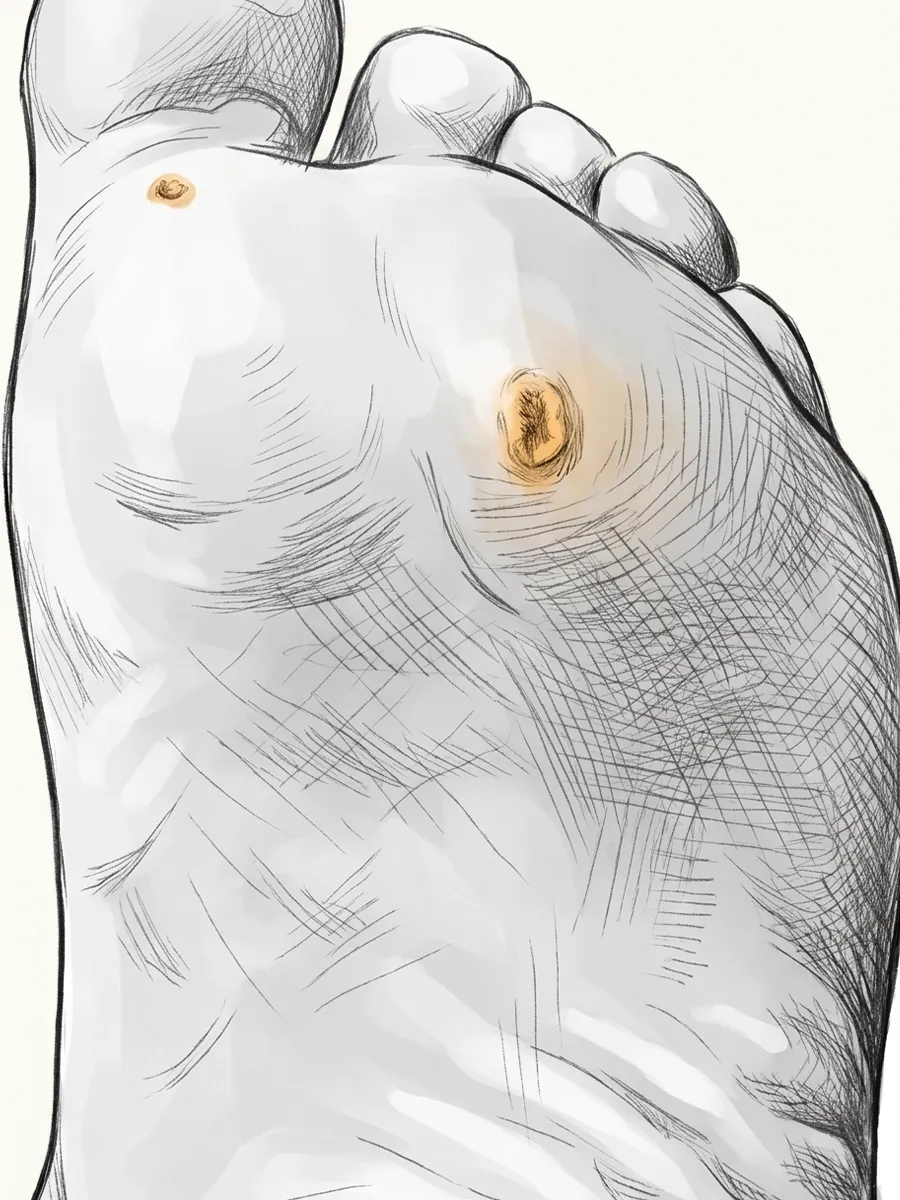
Wart Treatment
Evidence-informed treatment options for painful, persistent, or troublesome warts (verrucae), tailored to your individual needs and goals.
The problem
Warts (also known as verrucae when they occur on the feet) are caused by a viral infection of the skin.
They can occur at any age and may appear as:
- Painful lesions on the sole of the foot
- Clusters of multiple warts
- Thickened areas of skin
- Tender spots when walking or standing
- Long-standing lesions that have failed to resolve
While some warts eventually disappear naturally, many become painful, persistent, spread to other areas, or interfere with everyday activities, sports, work, or quality of life.
The challenge is selecting the most appropriate treatment for the individual patient and lesion.
How we treat it
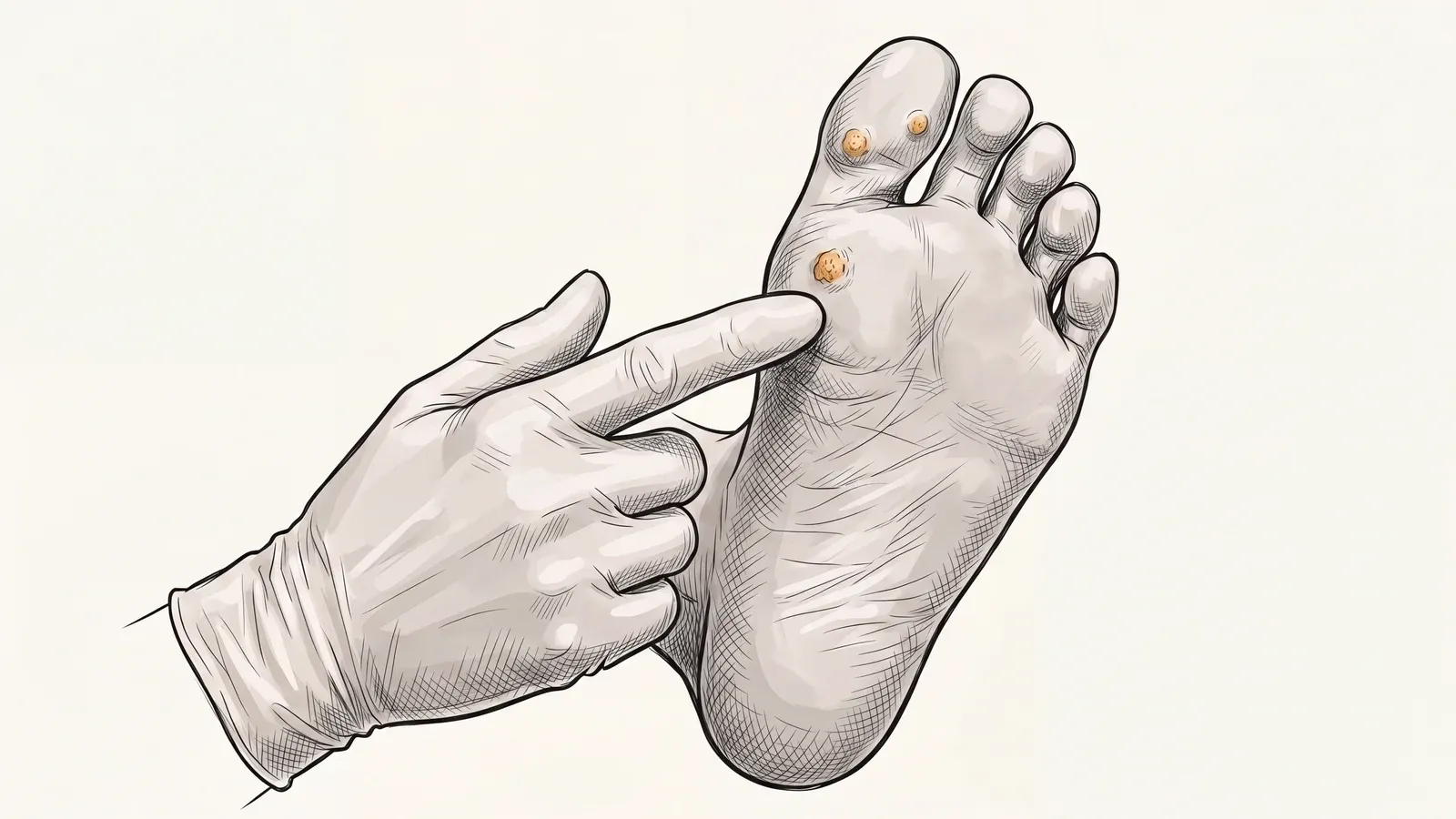
There is no single treatment that works best for every wart.
Successful treatment depends on factors such as:
- The age of the patient
- Number of lesions present
- Size of the lesion
- Duration of the wart
- Previous treatment history
- Pain levels
- Activity requirements
- Patient preferences
For many patients, treatment begins with a structured home treatment programme using topical medications, supported by regular podiatry reviews and debridement. This is often the preferred approach for children and patients who are needle-averse.
Where lesions are particularly large, persistent, or resistant to previous treatment, Blunt Dissection may be considered. This technique physically removes the wart tissue and can be highly effective in carefully selected cases.
For patients with multiple lesions, Faulkner's Needling may be recommended. This procedure aims to stimulate the body's immune response against the virus and can be particularly useful when several lesions are present.
Additional treatment strategies may include:
- Regular debridement
- Pressure reduction and offloading
- Footwear advice
- Activity modification
- Topical therapies
Our goal is to recommend the treatment most likely to achieve a successful outcome while minimising discomfort, disruption, and unnecessary intervention.
Why Masterton Foot Clinic
Verruca management is a particular area of interest within our clinic.
One of the challenges of wart treatment is that no single approach works for every patient. Successful management often involves selecting the right treatment at the right time rather than applying the same treatment to every lesion.
Many clinics and medical centres continue to rely heavily on cryotherapy (freezing with liquid nitrogen). While cryotherapy remains one of the most commonly used wart treatments, current evidence (Cochrane reviews and NICE guidance) and our clinical experience suggest that more effective options are often available, particularly for plantar warts.
What differentiates Masterton Foot Clinic is our use of treatment techniques not routinely available in many podiatry or general practice settings, including Faulkner's Needling and Blunt Dissection.
Rather than offering a single treatment approach, our podiatrists assess the lesion, discuss your goals, and recommend the treatment pathway most appropriate for your individual presentation.
Our focus is on helping patients resolve painful or persistent verrucae as efficiently as possible while remaining active and minimising unnecessary treatment.
Book with our podiatrists
Choose the clinician you would like to see, or call us and we will match you with the right person.



Not sure who to see? Call us on 06 370 4057 and we will point you in the right direction.
You might also be interested in
Minor Surgery
Safe and effective in-clinic procedures designed to resolve persistent foot conditions.
Skin & Nail Care
Professional care designed to maintain healthy feet and skin.
Biomechanical Assessment & Gait Analysis
Assessment of movement and loading patterns that may be contributing to pain around a wart.
Frequently asked questions
What is a verruca?
Are warts contagious?
Why do some warts persist for years?
What treatment works best?
Do all warts need treatment?
What treatments do you offer?
Why don't you freeze warts?
Can warts come back after treatment?
Related conditions
Ready to discuss your options?
Book online for the next available appointment, or call us to discuss the most appropriate treatment approach for your situation.
- ACC registered
- Southern Cross Easy-Claim available