
Gout
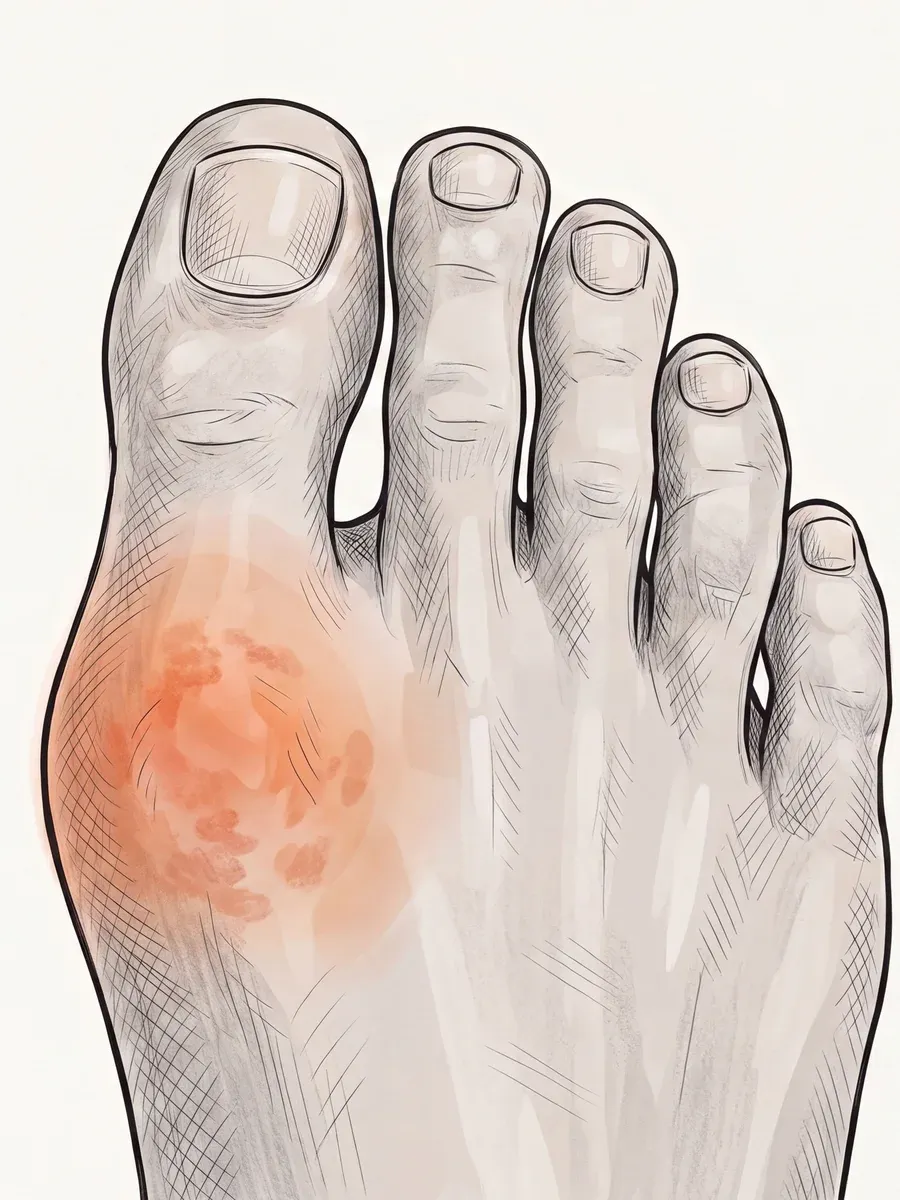
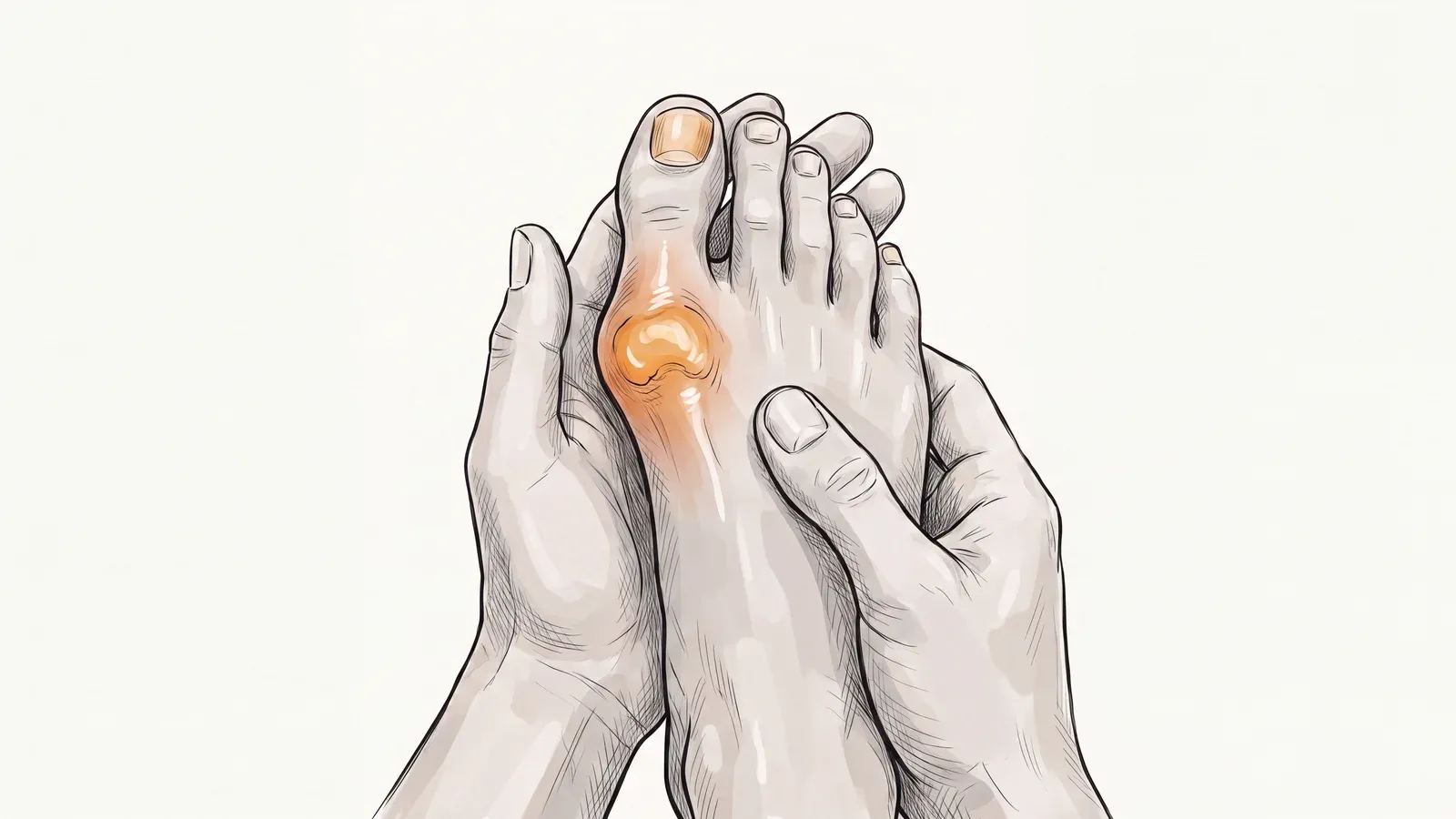
Gout is a common form of inflammatory arthritis that often causes sudden episodes of severe pain, swelling, redness, and warmth in the foot. It most frequently affects the joint at the base of the big toe, although other joints in the foot and ankle can also be involved.
At Masterton Foot Clinic, we assess and manage gout alongside your GP and other healthcare professionals. Our role is to help identify the condition, reduce its impact on your mobility, and support your recovery while helping prevent future problems.
What is gout?
Gout is a type of inflammatory arthritis caused by the build-up of uric acid crystals within a joint.
When uric acid levels in the blood become high enough, crystals can form inside joints. The body's immune system recognises these crystals as foreign, triggering an intense inflammatory response that results in pain, swelling, redness, and warmth.
At the time of writing, gout is considered one of the most treatable forms of arthritis when appropriately diagnosed and managed.
While gout commonly affects the big toe joint, it may also occur in the midfoot, ankle, heel, or other joints throughout the body.
Symptoms
Common symptoms include:
- Sudden onset of severe joint pain.
- Redness and warmth around the affected joint.
- Swelling.
- Extreme tenderness, even to light touch.
- Difficulty walking or bearing weight.
- Episodes that develop rapidly, often overnight.
- Symptoms that gradually settle over several days or weeks.
Some people experience occasional attacks, while others may develop more frequent episodes if uric acid levels remain elevated.
Causes
Gout develops when uric acid levels remain high enough for crystals to form within a joint.
Contributing factors may include:
- Genetics.
- Kidney disease.
- Certain medications.
- High alcohol intake.
- Obesity.
- Diet.
- Dehydration.
- Other medical conditions affecting uric acid metabolism.
Many people with gout have more than one contributing factor.
When should you see a podiatrist?
We recommend an assessment if:
- You develop sudden pain, swelling, or redness in your foot.
- You have repeated attacks of gout.
- Foot pain is affecting your walking or work.
- You are unsure whether your symptoms are caused by gout or another condition.
- You have ongoing foot pain following a previous gout attack.
If this is your first suspected attack or the diagnosis is uncertain, further medical assessment is important to confirm the diagnosis and exclude other serious conditions, such as infection.
How gout affects movement
Your feet and legs work as one connected system.
Almost every muscle in the lower leg attaches to the foot, helping to control walking, balance, and stability. During a gout flare, the affected joint often becomes so painful that people instinctively alter their gait to avoid loading it.
Although this protects the painful joint in the short term, altered walking patterns can place additional stress on other joints, muscles, and tendons throughout the foot and lower limb.
Once the acute attack has settled, our focus shifts towards restoring comfortable movement, improving function, and reducing unnecessary loading through the affected joint.
How we treat gout
Our role is to work alongside your GP to support both the short-term management of painful gout attacks and the long-term health of your feet.
Depending on your presentation, treatment may include:
- Clinical assessment.
- Advice regarding temporary activity modification.
- Footwear advice.
- Pressure reduction strategies.
- Custom Foot Orthoses where appropriate.
- Foot Mobilisation Therapy (FMT), once acute inflammation has resolved, where appropriate.
- Management of ongoing joint stiffness or secondary biomechanical problems.
- Referral to your GP for investigation and, where appropriate, ongoing medical management.
Our goal is to help reduce pain, restore mobility, and minimise the long-term impact gout may have on your feet.
Book with our podiatrists
Choose the clinician you would like to see, or call us and we will match you with the right person.



Not sure who to see? Call us on 06 370 4057 and we will point you in the right direction.
Treatments available
Orthopaedic Footwear
Footwear designed to improve comfort and reduce pressure on painful or stiff joints.
Learn moreCustom Foot Orthoses
Where clinically indicated, orthoses may help improve load distribution and reduce stress on joints affected by previous gout attacks.
Learn moreBiomechanical Assessment & Gait Analysis
Assessment of how your feet and lower limbs function during walking, particularly following recurrent gout attacks or ongoing joint stiffness.
Learn moreHigh-Risk Foot Care
Comprehensive assessment and management for feet at increased risk of complications.
Learn moreFrequently asked questions
Is gout caused by eating too much rich food?
Can gout be cured?
Should I walk during a gout attack?
Can gout permanently damage the foot?
How can a Podiatrist help if my GP manages my gout?
Related conditions
Foot Osteoarthritis
Foot osteoarthritis is a common cause of pain, stiffness, and reduced mobility.
Rheumatoid Arthritis
Rheumatoid arthritis (RA) is an autoimmune disease that commonly affects the feet.
Big Toe Arthritis
Helping you understand the cause of pain and stiffness in the big toe joint, reduce symptoms, and maintain comfortable movement for as long as possible.
High-Risk Foot Care
Helping you stay active
A gout attack can be extremely painful, but with appropriate assessment and ongoing management, many people continue to live active and independent lives. Whether you're experiencing your first attack or managing longstanding gout, we'll work alongside your healthcare team to help reduce pain, protect your joints, and keep you moving comfortably.
- ACC registered
- Southern Cross Easy-Claim available