
Morton's Neuroma
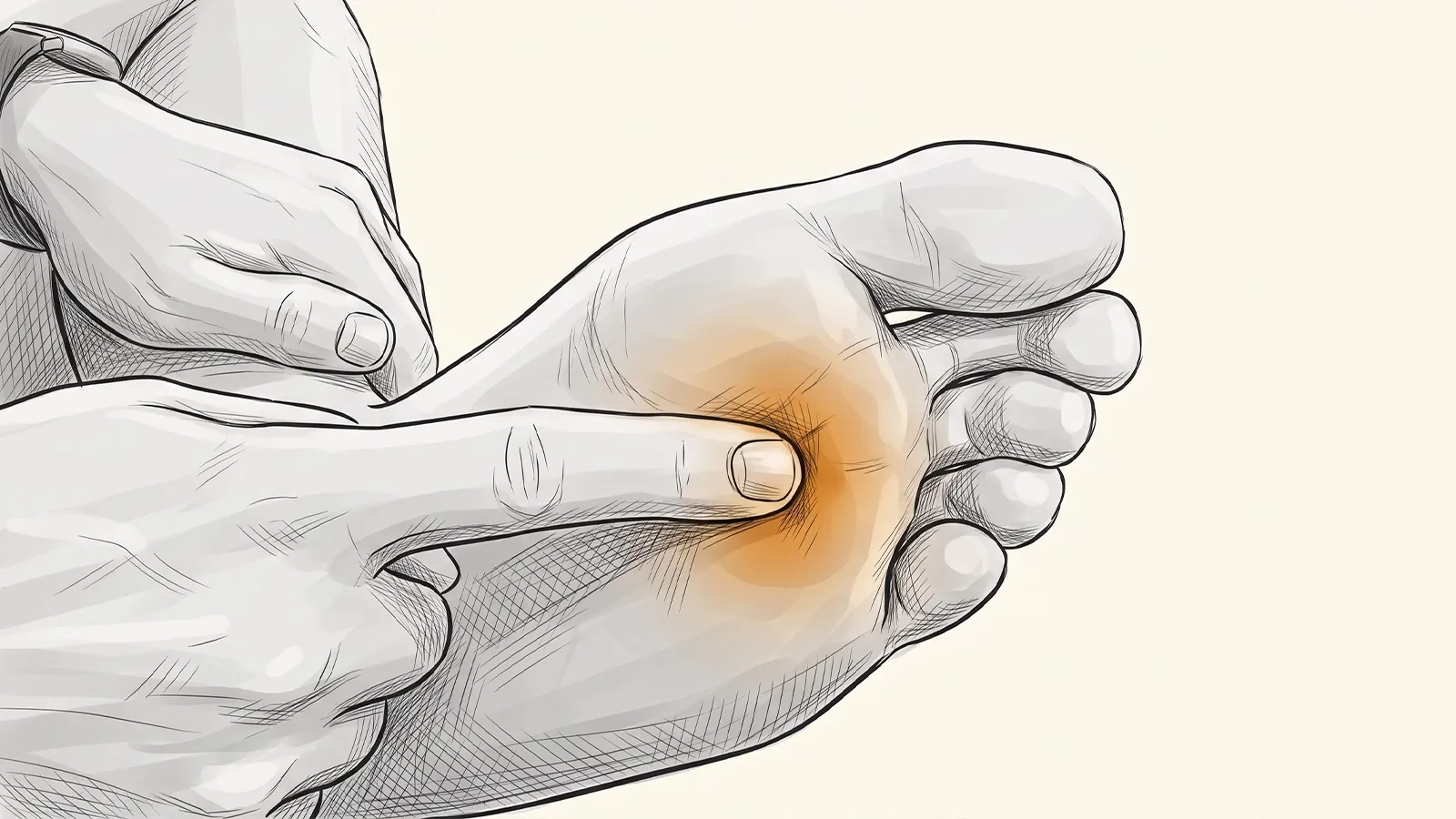
Morton's Neuroma is a common cause of pain in the ball of the foot. It often causes burning pain, tingling, numbness, or the sensation of walking on a pebble beneath the forefoot. Many people find that symptoms are aggravated by certain footwear, prolonged standing, walking, or exercise.
What is Morton's Neuroma?
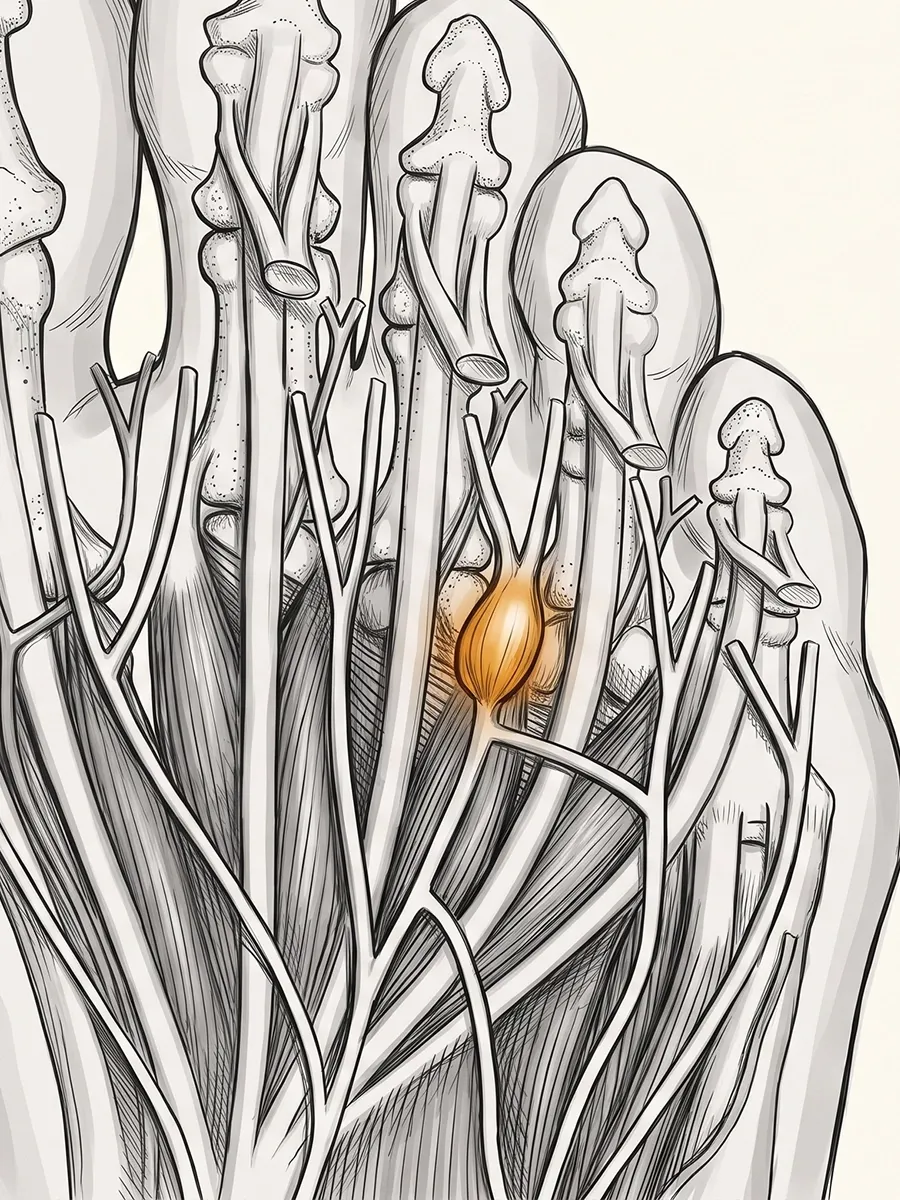
Morton's Neuroma is a condition involving irritation and compression of a nerve between the toes, most commonly between the third and fourth toes.
Over time, repeated compression and irritation can thicken the tissue surrounding the nerve, resulting in pain and altered sensation in the forefoot and toes.
Despite its name, a Morton's Neuroma is not a tumour. It is more accurately described as a thickened and irritated nerve resulting from ongoing compression and loading.
Symptoms
- Burning pain in the ball of the foot
- Tingling or numbness in the toes
- The sensation of standing on a pebble or a folded sock
- Pain that worsens with walking, standing, or exercise
- Symptoms aggravated by tight or narrow footwear
- Relief when removing shoes or massaging the foot
Causes
Morton's Neuroma develops when a nerve becomes repeatedly irritated or compressed.
Common contributing factors include:
- Tight or narrow footwear
- High-heeled shoes
- Increased forefoot loading
- Certain sporting activities
- Foot posture and biomechanics
- Bunions and other forefoot deformities
- Reduced the space between the metatarsal bones
Because your feet form the foundation of movement, the way your feet function can influence the loads passing through the forefoot and the pressures placed on the nerve.
When to see a podiatrist
We recommend an assessment if you are experiencing:
- Burning pain in the ball of the foot
- Numbness or tingling in the toes
- Symptoms that are affecting walking, exercise, work, or daily activities
- Recurring symptoms despite changing footwear
- Worsening pain over time
Early assessment often allows treatment to begin before symptoms become more persistent.
Importantly, not all forefoot pain is caused by Morton's Neuroma. Conditions such as metatarsalgia, plantar plate injuries, bursitis, stress fractures, and arthritis can present with similar symptoms and may require different treatment approaches.
How we treat Morton's Neuroma
At Masterton Foot Clinic, our Proven Process combines current evidence with extensive clinical experience.
We focus on identifying the factors contributing to nerve irritation and reducing the forces that cause compression through the forefoot.
Treatment is tailored to your symptoms, lifestyle, footwear, and activity levels.
Depending on your presentation, treatment may include:
- Footwear assessment and advice
- Custom Foot Orthoses
- Metatarsal offloading and padding
- Activity modification
- Load management strategies
- Foot Mobilisation Therapy (FMT), where appropriate
- Referral for corticosteroid injection where indicated
- Hydrodissection where appropriate
- Surgical referral in more persistent cases
Our goal is to reduce nerve irritation, improve comfort, and help you return to walking, work, exercise, and the activities you enjoy.
Book with our podiatrists
Choose the clinician you would like to see, or call us and we will match you with the right person.



Not sure who to see? Call us on 06 370 4057 and we will point you in the right direction.
Treatments available
Custom Foot Orthoses
Individually prescribed orthoses designed to reduce forefoot pressure, improve load distribution, and reduce irritation of the affected nerve.
Learn moreBiomechanics & Gait
A comprehensive assessment of how your feet and lower limbs function during standing, walking, and movement.
Learn moreFoot Mobilisation Therapy (FMT)
Hands-on treatment designed to improve foot mobility and movement efficiency where joint stiffness or altered mechanics may be contributing to forefoot overload.
Learn moreOrthopaedic Footwear
Footwear solutions designed to reduce forefoot compression and provide adequate space for the toes and forefoot.
Learn moreFrequently asked questions
Can Morton's Neuroma go away on its own?
Do I need surgery for Morton's Neuroma?
What shoes should I wear?
Can orthotics help?
Do I need an ultrasound?
Related conditions
Metatarsalgia
Metatarsalgia is one of the most common causes of pain beneath the ball of the foot.
Plantar Plate Tear
A plantar plate tear is a common cause of pain beneath the ball of the foot and around the base of the toes.
Bunions
Bunions are one of the most common foot conditions we assess and manage at Masterton Foot Clinic.
Forefoot & Toe Pain
Helping you identify the cause of pain in the ball of the foot and forefoot, reduce symptoms, and return to comfortable walking, work, and activity.
Ready to stop the burning?
Book online for the next available appointment, or call us to discuss your needs.
- ACC registered
- Southern Cross Easy-Claim available