Turf Toe
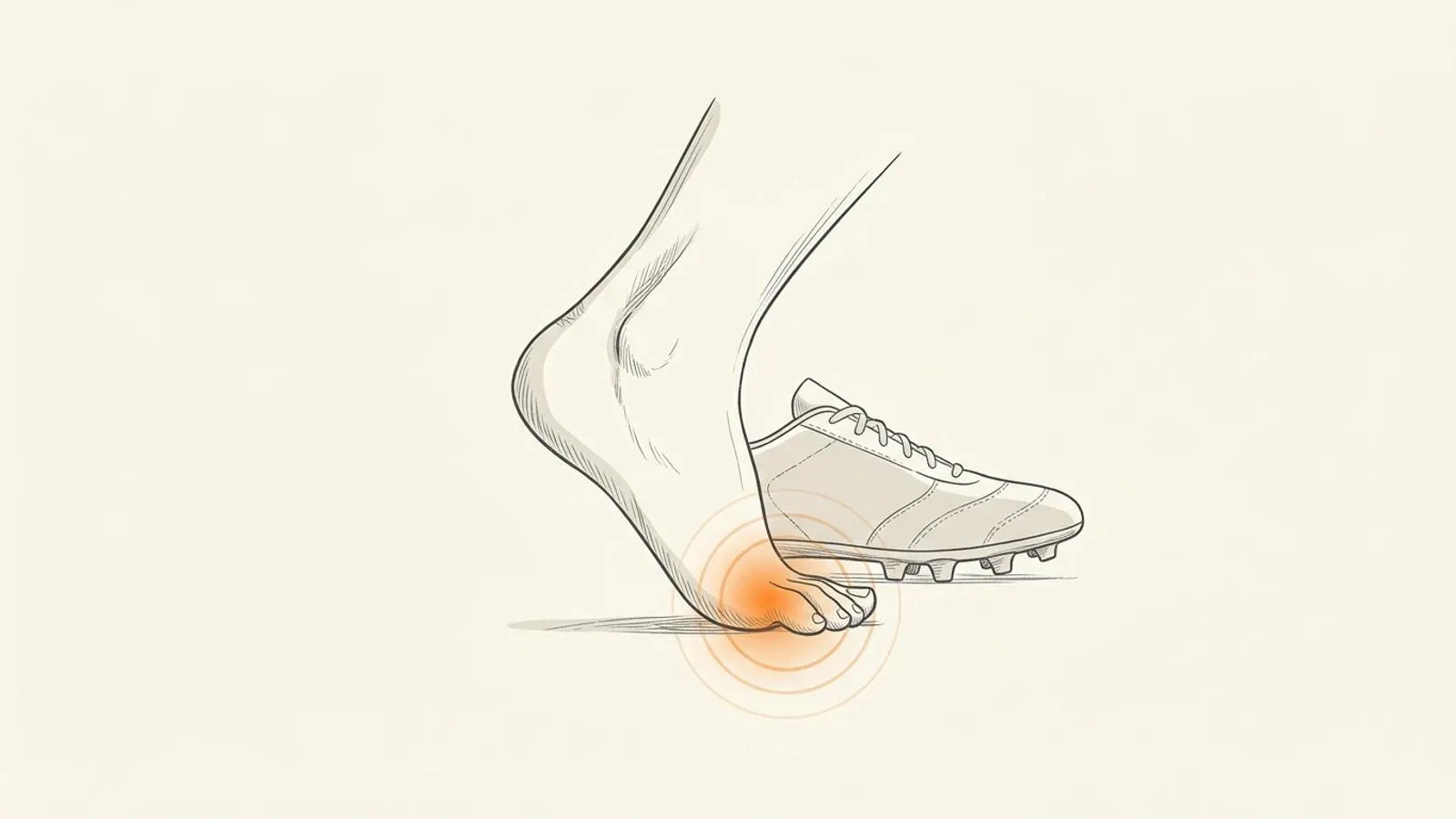
Turf Toe is a sprain of the big toe joint that commonly occurs during sports and can make walking, running, sprinting, and pushing off uncomfortable, potentially affecting athletic performance if not managed appropriately.
Despite the name, Turf Toe can occur on any playing surface and is commonly seen in rugby, football, athletics, netball, dance, and other sports that involve rapid acceleration, changes of direction, or pushing off the forefoot.
What is Turf Toe?
Turf Toe is a sprain of the ligaments and soft tissues beneath the big toe joint.
It most commonly occurs when the big toe is forced upwards beyond its normal range of motion while the forefoot remains fixed on the ground.
Injuries can range from mild stretching of the supporting structures through to more significant ligament damage involving the plantar plate, sesamoids, or joint capsule.
Symptoms
Common symptoms include:
- Pain at the base of the big toe
- Swelling around the joint
- Bruising beneath the toe
- Pain when walking, running, or pushing off
- Reduced movement of the big toe
- Weakness during sport
- Difficulty sprinting, jumping, or changing direction
More severe injuries may result in persistent pain, instability, or difficulty returning to sport.
Causes
Turf Toe most commonly occurs when the big toe is forced into excessive upward bending under load.
Common causes include:
- Sporting injuries
- Sudden acceleration or pushing off
- Change-of-direction movements
- Landing awkwardly on the forefoot
- Contact injuries
- Playing on firm or artificial surfaces
- Footwear that allows excessive bending through the forefoot
When to see a podiatrist
We recommend an assessment if you have:
- Pain at the base of the big toe following an injury
- Swelling or bruising around the joint
- Difficulty walking or pushing off
- Persistent stiffness or weakness
- Symptoms that are limiting sport or exercise
Early assessment is important because more significant injuries can sometimes involve the plantar plate, sesamoids, or joint cartilage.
Where the injury results from a specific accident or sporting incident, ACC cover may be available.
How we treat Turf Toe
Our Proven Process helps:
- Determine injury severity
- Assess joint stability and function
- Identify when imaging is needed
- Protect healing tissues
- Guide a safe return to activity
Treatment may include:
- Activity modification
- Taping and strapping
- Footwear advice
- Orthotic therapy
- Rehabilitation programs
- Return-to-sport planning
- Imaging referral where indicated
Our goal is to reduce pain, protect the joint, and help you return to the activities you enjoy.
Frequently asked questions
How serious is turf toe?
Turf Toe injuries range from mild ligament sprains to more significant injuries involving the plantar plate, sesamoids, or joint capsule. Mild injuries may settle within a few weeks, while more severe injuries can take several months to fully recover and return to sport.
Can I play through turf toe?
This depends on the severity of the injury. Some mild injuries may allow continued participation with appropriate taping, footwear modifications, or protection. More significant injuries often require a period of reduced activity to allow healing and reduce the risk of long-term joint problems.
Will turf toe come back?
Previous injury can increase the risk of future problems, particularly if strength, mobility, or joint stability are not fully restored. Appropriate rehabilitation, footwear advice, and orthotic modifications, where required, can help reduce the risk of recurrence.